
Crystal Room Innovation® (CRI): A Systematic Method for the Strategic Analysis and Incremental Development of Complex Systems
Abstract
Crystal Room Innovation® (CRI) is a universal strategy and innovation development method based on the systematic decomposition of current states into descriptive properties and their positioning within a two- or three-dimensional potential matrix. Inspired by the Finite Element Method (FEM), CRI enables an iterative approximation process for the step-by-step approach to any target state, including those that appear difficult or impossible to reach from the initial perspective. The method integrates combinatorics, potential fields, solution vectors, and temporal dimensions, and is structured into three proficiency levels (Green Belt, Black Belt, Red Belt). CRI opens up novel avenues for knowledge generation, strategic decision architecture, and hybrid human-AI intelligence.
Origins and Scientific Context
The Crystal Room Innovation® method was conceived in 2015 and registered as a trademark in 2018. Its development is rooted in the practical necessity of overcoming the limitations of established approaches in innovation management, creativity management, and project management. Its developer, engineer Frank Marco Günzel, originally created CRI to generate, through a reliable and reproducible process, solution strategies for goals whose attainability appeared difficult or impossible from the respective starting point.
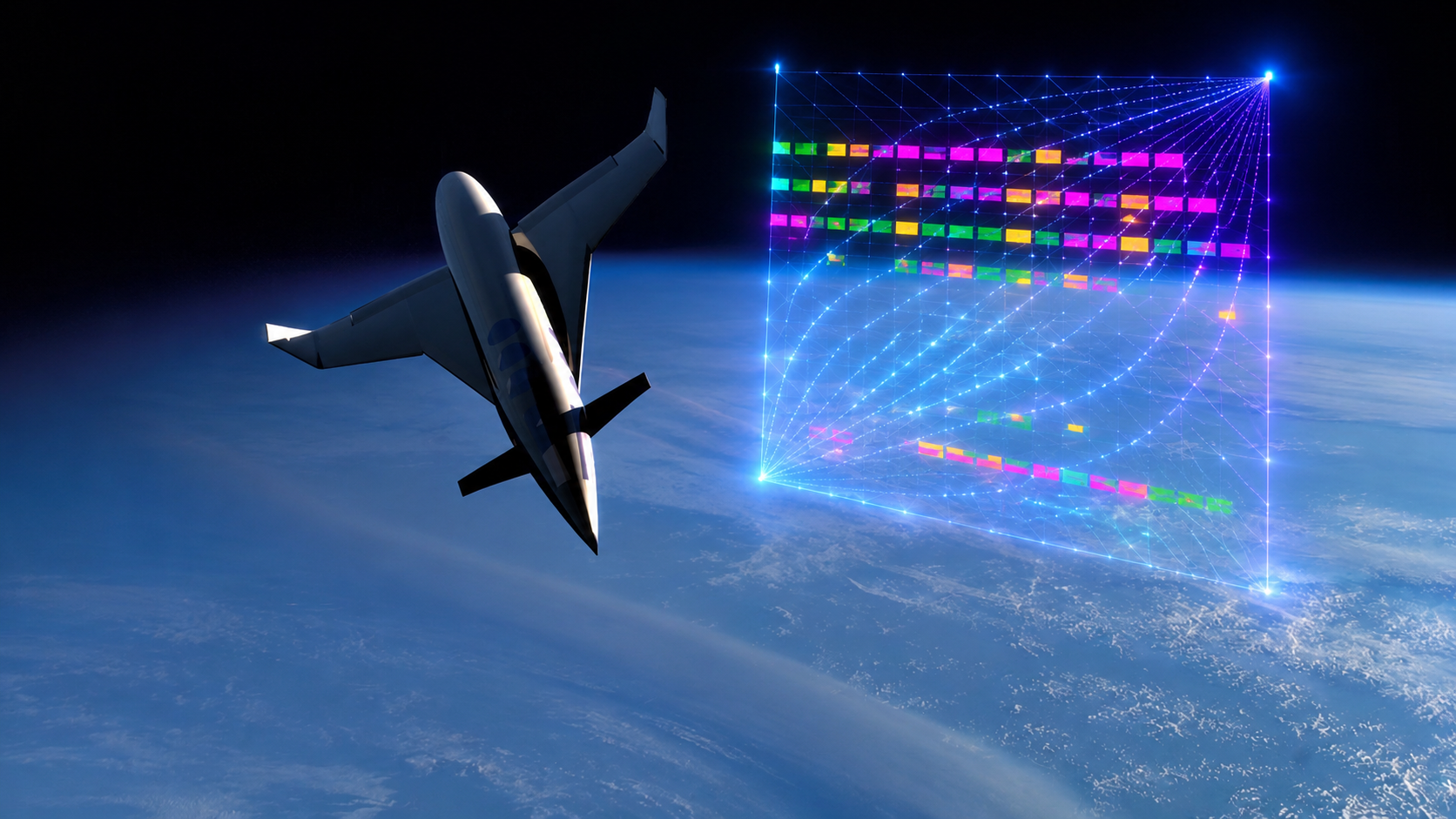
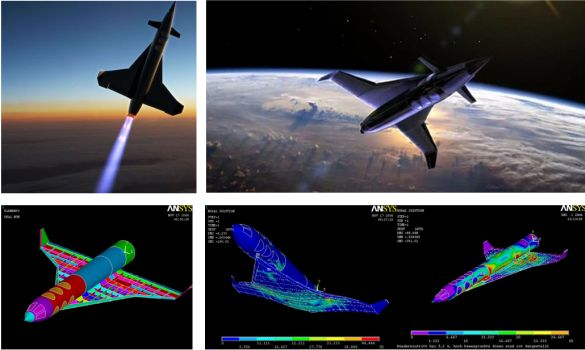
A key catalyst was the suborbital crewed spaceflight project "Project Enterprise" (from 2005 onward), in which Günzel was among the co-founders and key initiators of the German NewSpace movement. The methodological inspiration stems primarily from the Finite Element Method (FEM), in which complex structures are made computable through decomposition into finite elements, matrix formation, and iterative approximation procedures. CRI transfers this principle to abstract states: these are decomposed into their descriptive properties, positioned within a potential matrix, and systematically developed further.
Fundamental Principles of the CRI Method
At the core of the method lies a two- or three-dimensional matrix in which information is positioned and processed according to a defined logic key. This universal approach allows the analysis of any current state and the derivation of strategy increments that enable a step-by-step approach toward a desired target state. A defining characteristic is the freedom in choosing the target state – in principle, it may lie beyond what is currently achievable, since CRI is designed as an iterative approximation process.
The CRI matrix populated with properties functions as an analogue to the FEM computational model. A specific logic key generates meaningful metrics, derives comprehensive insight, and develops purposeful strategy increments. After each increment has been successfully implemented, the properties involved progressively shift to higher coordinate values along characteristic paths – diagonally within the plane or through three-dimensional space.
The name Crystal Room Innovation® derives from the crystallization-nucleus-like distribution of properties across interconnected, categorized clusters. These clusters act as nuclei for the formation of new structures and innovative approaches. Combinatorics explains the method's generative power: from a manageable set of properties (well under a thousand in order of magnitude), virtually unlimited numbers of strategic and solution approaches can be formulated through different subsets.
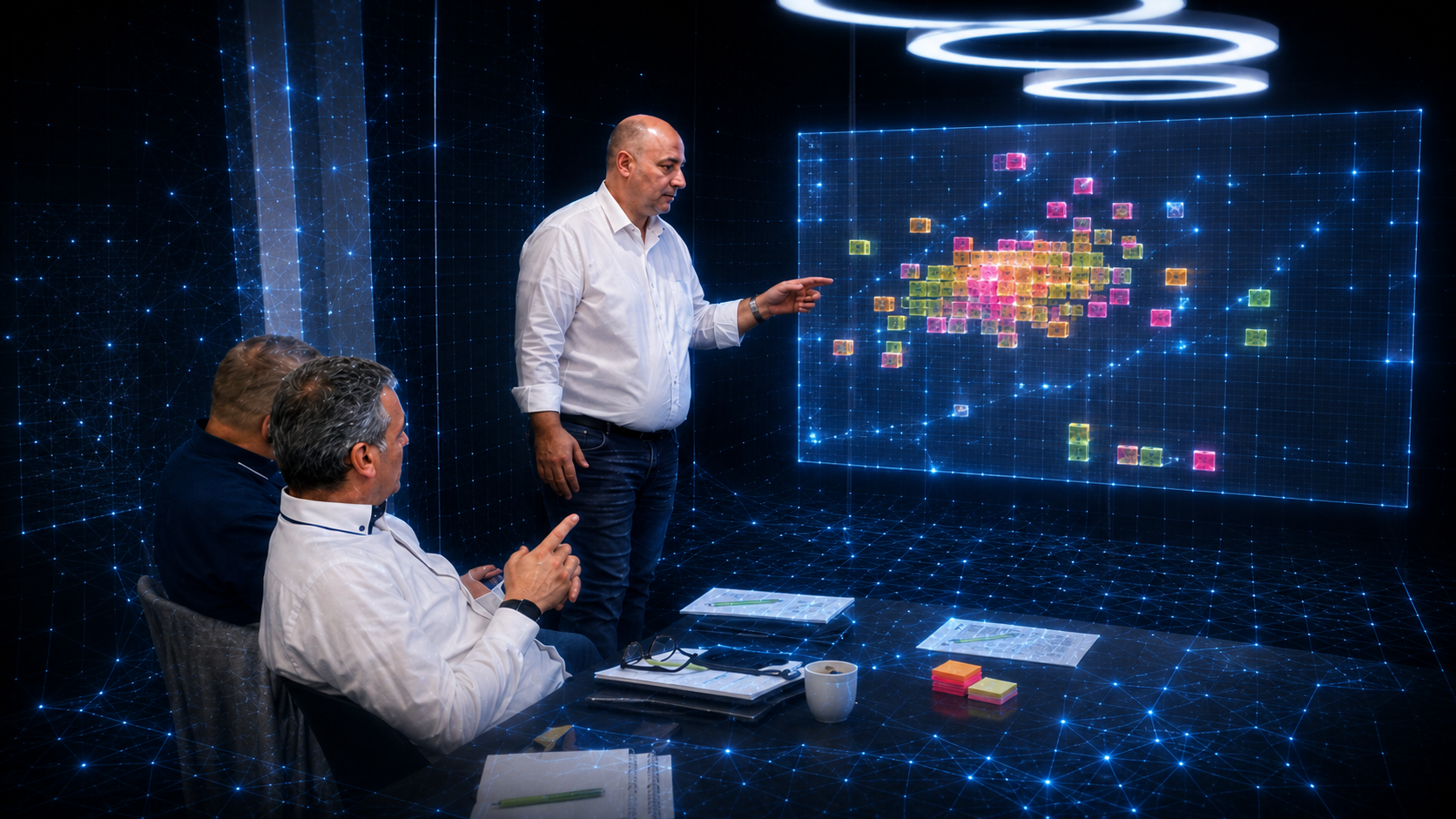
A central element is the potential field, which extends from the matrix's coordinate origin across the plane or space. This field filters purely goal-directed approaches out of the quasi-infinite variety of possibilities – analogous to a gravitational field, in which objects never roll "uphill" on their own. The axis assignment of the CRI coordinates generates this logic, or potential, field. In contrast to FEM, which pursues a minimal elastic potential as its goal, CRI maximizes a potential that applies simultaneously to all describable states and categories. Target criteria and direction are therefore already known before the actual analysis begins.
Further filters arise from the individual purpose of a strategic increment. This purpose is quantified through ratios of angles and lengths of solution vectors that describe the incremental path within the matrix. The distribution of the potential field can be visualized through potential field lines; optimal solution vectors either follow these lines or adopt steeper angles, depending on the defined sense of purpose.
Proficiency Levels of the CRI Method
CRI Green Belt (Level 1)
This entry-level stage focuses on the CRI algorithm in its two-dimensional basic form. Properties are distributed within the potential matrix using an evaluation logic. In practice, color-coded Post-it notes are used to represent categories; Excel tools, software, or AI systems are used as a supplement. Metrics derived from the distribution, as well as characteristic distribution patterns, yield novel insights. This level already enables the targeted development of disruptive innovations and is sufficient for many practical applications. It also forms the basis for the first market derivatives of the CRI method, often combined with AI systems built on publicly available knowledge.
CRI Black Belt (Level 2)
At this stage, the third dimension is activated, giving the method the "Room" component of its name. Temporal components, the implementation speed of strategic increments, and the couplings between timing, potential differences, sense of purpose, and solution vectors are integrated. The method becomes fully internalized: it shapes perception, evaluation, and decision-making, and overcomes emotional disruptive factors such as euphoria or impatience through methodical clarity.
CRI Black Belt forms the foundation for genuine hybrid intelligence through the coupling of human and AI, including the networking of multiple practitioners within CRI clusters. Training toward the CRI Black Belt requires the Green Belt as well as a documented, successfully completed real-world project, and comprises two years culminating in a final examination project.
CRI Red Belt (Level 3)
The highest level dissolves rigid matrix structures and enables work with perspectives on cross-sectional planes, topologies, and fluid metamorphoses in a freestyle mode. It requires complete mastery at Black Belt level and is applied exclusively in selected cases, directly by the method's developer. Training is planned for 2028 at the earliest and requires a CRI Black Belt with several years of practical experience.
Advanced Procedures and Analogies
CRI integrates interpolation and extrapolation procedures as well as the targeted, logical synthesis of new properties. These allow for a demand-driven increase in the local resolution of the property distribution. Combined with combinatorics, this results in a nearly arbitrarily scalable generative capacity – originally inspired by the Hubble Ultra Deep Field (HUDF), which, through improved observational methodology (the WFC3 instrument, installed in 2009 during STS-125), revealed previously invisible galaxies.
From Black Belt level onward, the incremental approach is referred to as the "Water-Approach": strategies behave in a fluid manner, flow around obstacles, and make use of maximum adaptability (the "Water-Approach" name is inspired by Bruce Lee's "Be water, my friend"). All principles remain fully effective without IT or AI; the use of digital tools extends scalability, while AI coupling enables hybrid strategic intelligence.
Early conceptual groundwork – such as the "sociomechanical" FEM model for visualizing team tension fields ("Team Genetics") and the search for "dream team" configurations – led, through abstraction, to the universal, practice-oriented, matrix-based CRI method.

Universality of the CRI Method
One of the greatest challenges for many first-time users of the Crystal Room Innovation® method lies in its extraordinary universality. At first glance, it seems almost inconceivable that one and the same method is capable of developing strategy increments and comprehensive strategies for virtually any conceivable subject area. In practice, CRI is successfully applied in fields such as engineering, research & development, business field development, holistic corporate strategy, personnel development, sales and marketing strategy, and personal and potential development – and, when considering an organization holistically, even simultaneously across all of these fields.
It is particularly remarkable that the CRI method itself functions entirely independently of IT or AI infrastructure. As a result, not only large organizations but also solo entrepreneurs and private individuals can fully benefit from its capabilities and realize genuine visions on a methodically sound basis – regardless of which subject areas are involved.
The universality of the CRI method is perhaps best compared to that of writing or mathematics: it is a universal tool applicable across every conceivable domain. This property is grounded, on the one hand, in the matrix's potential-field approach, which operates equally regardless of the nature of the properties described. On the other hand, it arises from the fundamental possibility of positioning anything that can be described or characterized within the CRI matrix – including simultaneously. In this context, it is irrelevant whether the elements described already exist, do not yet exist, or no longer exist.
Outlook and Hybrid Intelligence
Through its matrix, which serves as an interpretive layer, the CRI method enables particularly efficient human-AI communication with minimal data input and maximum knowledge gain. In hybrid systems, accounting for individual sense of purpose plays a decisive role in achieving superiority over AI alone.

Developer Biography: Frank Marco Günzel
Frank Marco Günzel is an engineer, entrepreneur, strategy architect, and deep-tech pioneer with more than 25 years of experience at the intersection of engineering, innovation management, strategic decision architecture, and international technology development. His career has been defined by a continuous pursuit of methodological precision and the ability to make complex challenges solvable through systematic decomposition and integrative approaches.
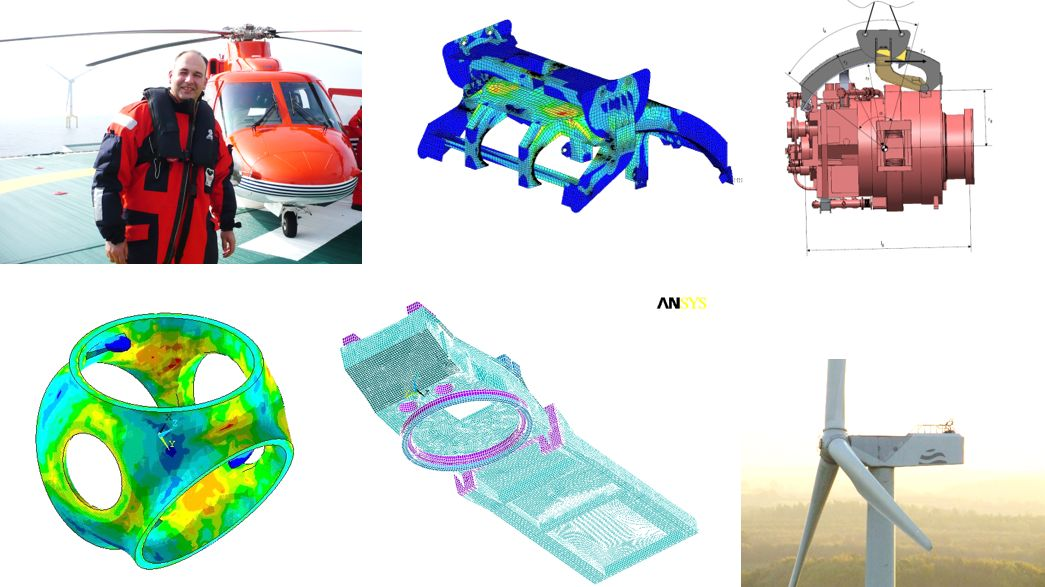
After completing his degree in mechanical engineering with a focus on the Finite Element Method (FEM), Günzel immediately founded an engineering firm specializing in structural mechanics and material fatigue. This firm rapidly evolved into an engineering company that played a significant role in, among other things, the development of the world's first 5 MW wind turbine. In parallel, he developed his own analysis methods and software solutions, including the SIFA® system, which significantly accelerated complex fatigue analyses.
His deep engagement with complex systems led early on to interdisciplinary questions extending beyond purely technical structures. Starting in 2001, over a period of nearly two years, Günzel observed constructive tensions arising during joint task work within his own highly qualified engineering team – all FEM experts personally trained by him. These observations led to the research and experimentation project "Team Genetics".
Using a self-developed sociomechanical finite element model, he visualized the internal tension states and tension fields of small teams as color-coded contour graphics, comparable to meteorological weather maps. The goal was to integrate qualitative and quantitative data – subjective assessments (trust, clarity, satisfaction) with observable patterns (communication density, decision-making pathways) – in order to generate a "genetic fingerprint" of teams.
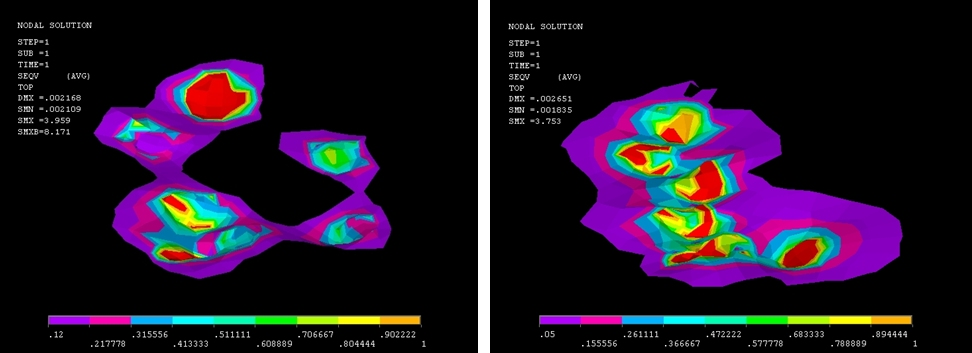
Local tension peaks were intended to serve as an early-warning system for escalations or burnout risk, while simulations were meant to make the effects of personnel or role changes on the overall system predictable. Although the model offered highly meaningful, connectable insights, the approach proved too complex and resource-intensive for broad practical application. The search for a more abstract, universally applicable solution began.
From 2005 onward, this search was further motivated by the buildup of the "Project Enterprise" spaceflight project, with the aim of being able to solve tasks later in the project's course that had initially seemed unsolvable.
Years of ongoing work in creativity and innovation management eventually brought forth, as a concept, the use of Post-it notes positioned within a coordinate field. The decisive conceptual breakthrough then occurred in 2008 during a stay at NASA's Goddard Space Flight Center in Maryland, USA. Günzel was personally present as the Wide Field Camera 3 (WFC3) – the final and most technologically advanced instrument of the Hubble Space Telescope – was being prepared for the Space Shuttle mission STS-125 (Hubble Servicing Mission 4). This camera was installed on May 14, 2009, during the mission's first spacewalk, as a replacement for the Wide Field and Planetary Camera 2. In late August 2009, the WFC3 delivered the famous Hubble Ultra Deep Field (HUDF) – a long-exposure image totaling 173,000 seconds that revealed countless previously invisible galaxies where there had only been deep blackness.
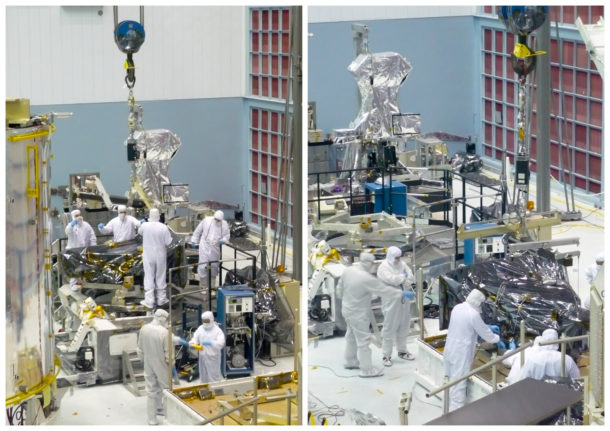
This experience became a pivotal moment: Günzel recognized how decisively the gain in knowledge depends on the resolution, the procedure, and the method of observation. The analogy to electron microscopes and powerful telescopes such as the Hubble Space Telescope, or today the James Webb Space Telescope, was an obvious one. The question of which comparable "tools" exist for the human mind, for creativity, and for strategic problem-solving ability became a central driving force. In this context, he incorporated interpolation and extrapolation procedures, as well as the targeted, logical synthesis of new properties, into his thinking – procedures that enable a dynamic increase in local resolution within a matrix.
These insights fed directly into the development of the Crystal Room Innovation® method, whose conceptual foundations received their name in 2015 and were registered as a trademark in 2018.
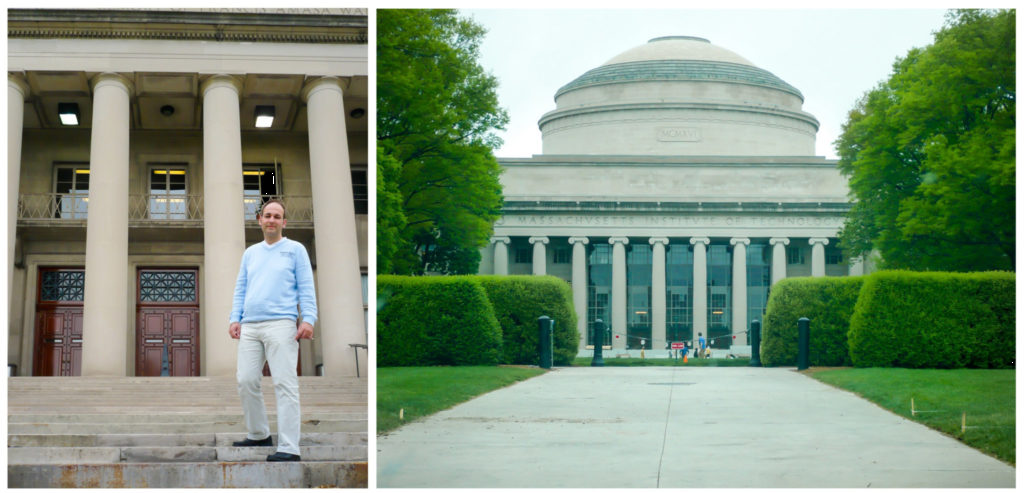
In parallel with his entrepreneurial activities, Günzel provided significant impetus for the German NewSpace movement from 2005 onward, through the "Project Enterprise" spaceflight project and the development of the rocket-powered aircraft "Black Sky." He organized international collaborations and delegation trips (including to Malaysia and Saudi Arabia), built complementary networks (including with the University of Zurich), and generated strategic contacts in politics, science, and industry.
From the cumulative experience gained in highly complex technology projects, the years-long methodical search, and the inspiring analogies drawn from engineering and space research, Crystal Room Innovation® emerged as a universal strategy and innovation method. Today, Frank Marco Günzel continues to develop CRI further, particularly its coupling with artificial intelligence, to create new forms of human-AI hybrid intelligence for strategic decision-making processes. His work combines deep engineering expertise with visionary method development and practical implementation at C-level.
